News & Insights
Upgrading high-purity water in pharmaceutical manufacturing facilities with minimal disruption
Upgrading a high-purity water system doesn't have to mean a shutdown. Learn how sequencing keeps production running through qualification.
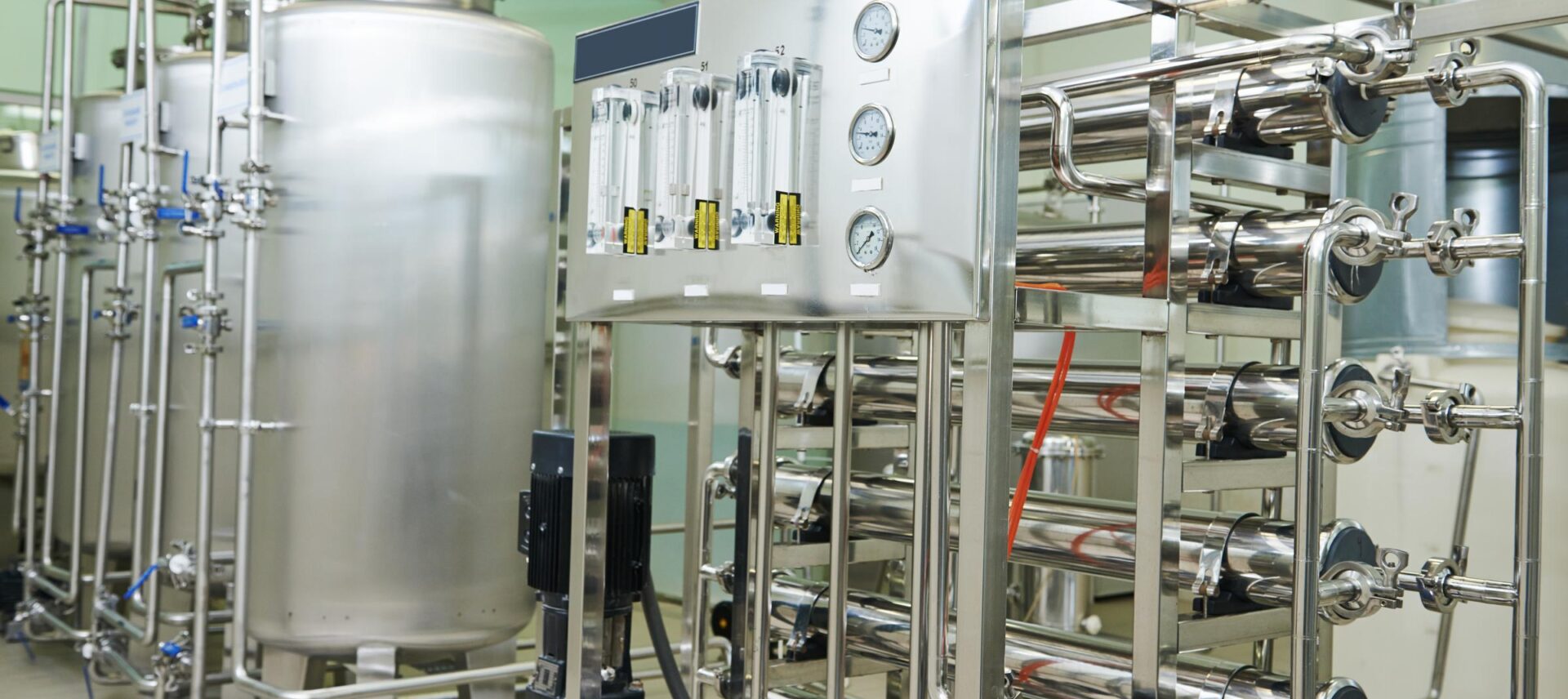
Most high-purity water upgrades begin the same way. A system that once ran unnoticed in the background starts breaking down more often than it should.
As a result, the plant it services can no longer count on it to keep pace with production. By the time a manufacturer picks up the phone, the system is already struggling to do its job.
Most manufacturers treat the problem as an equipment decision: find a better system, specify it, purchase it, install it, and then commission and validate it. But a purified water system does not sit off to the side of a GMP facility. It can feed hundreds of critical points of use in the plant, meaning the real challenge has little to do with which system to buy and everything to do with how to replace it without adversely impacting the production it supports.
What is driving more of these upgrades right now
Much of the pressure driving these projects can be traced back to growth. As manufacturers expand production or implement new modalities, they need more capacity than their existing systems were designed to deliver. The issues may show up in generation capacity, storage, or the need for distribution loops to reach more or further points of use than before.
This kind of expansion exposes problems that have been present, but tolerated, for years. Older water systems may carry dead legs, drain poorly, or use recirculation and temperature control systems that never quite performed to specification. Manufacturers are increasingly using the moment of expansion as a reason to address these issues rather than work around them.
New heat exchangers, pumps, valves, and instrumentation replace aging components as part of the same project. However, this brings automation and monitoring capabilities the original system did not have.
Better components and data support both improved water quality and fewer production interruptions. These reinforce the original business case for expansion. What started as a capacity project often ends up solving a reliability problem the plant had been living with for years.
Diagnosing what is driving the upgrade
Before any redesign work begins, it’s more useful to determine what is forcing the manufacturer’s hand. Frequent downtime and limited capacity often go together; separating them requires more than a look at the equipment itself.
Assessing the problems begins with the existing components: their condition, their sizing, and whether critical components still have OEM support. It continues with conversations with the production and maintenance teams, since the people running the system day-to-day usually have a clearer sense of system strains and weak points than any spec sheet does.
A review of water consumption during peak periods, viewed alongside the plant’s production forecast, can confirm whether capacity is the real constraint. Alternatively, storage and distribution may be limiting the system before generation capacity becomes an issue.
Getting this diagnosis right is critical to shaping the right solution. A project built around the wrong assumptions, whether it is treating a capacity issue as a reliability fix or the reverse, resurfaces the same problems within a few years.
Why qualification is the real obstacle
Once the diagnosis is clear, the harder question follows: why does replacing a critical utility system that services an entire plant take so much longer than manufacturers expect? The answer almost always comes down to the commissioning/qualification/validation (CQV) effort, which carries more weight in a purified water system than in most other plant infrastructure.
Replacing a USP water system from generation through distribution requires the same qualification work — installation, operational, and performance qualification — as a new system would, regardless of how much of the surrounding infrastructure remains in place.
Modifying an existing validated system carries a lighter but still substantial burden, requiring requalification of the changes through installation and operational qualification. This is along with an abbreviated performance qualification that typically includes a sanitization cycle and verification that the water meets specifications before the system is released by QA for production to use.
CQV creates a scheduling reality that is easy to underestimate if not included in the early planning process. A new system cannot support GMP production until installation and operational qualification are complete and the early phases of performance qualification are underway; some risk remains until all phases of performance qualification are finished. Manufacturers who plan around installation timelines alone, without accounting for this CQV runway, land further behind schedule than expected.
Keeping production supplied through the changeover
None of these changes address the basic constraint driving the whole project. A plant still needs water while the new system comes online.
Minimizing interaction with the existing system for as long as possible protects production and planning early for how test and qualification requirements will be met, whether through feed water, utilities, or some combination of both, keeps that runway from becoming a bottleneck later. Temporary rentals, such as water tanks or pre-treatment equipment, often bridge the gap when the existing system cannot support both operations at once.
The more effective version of this approach runs the new and old systems in parallel wherever possible. A replacement generation system can even be brought online alongside the existing one through installation and operational qualification with the right planning in place. This means much of the qualification burden gets absorbed before the plant ever depends on the new system. The actual changeover to the existing distribution piping and points of use usually occurs during a planned shutdown, followed by performance qualification confirming the system is ready for routine use.
The requalification scope is not universal, and treating every change as a full requalification adds cost and time that are not always necessary. Changes that affect validated performance move through change control, and the scope required, full or partial, depends on the nature of the change itself.
Common triggers include:
- Adding or removing a point of use
- Piping modifications: Changing
- Replacing major equipment
- Changing the sanitization method
- Changing operating temperature
- Changing storage capacity
- Changing membranes or major treatment technology
- Significant control-system changes
Scoping requalification correctly against this list early in the project helps keep the schedule realistic instead of padded with unnecessary work.
Where these projects tend to go wrong
The gap between finishing installation and operational qualification and completing performance qualification is where most of the real disruption risk lives. A system can appear ready before it is cleared for full production use. Manufacturers who underestimate the gap experience an unplanned extension of their changeover timeline instead of the smooth cutover they planned for.
Avoiding that outcome comes down to sequencing more than any single technical decision. Parallel operation, shutdown-timed cutovers, rentals used as a bridge rather than a permanent fix, and requalification scoped specifically to the change rather than defaulted to the maximum all work together to keep the project on schedule.
None of these tactics works particularly well in isolation. This is why they need to be planned together from the start rather than layered on as problems appear.
How Salas O’Brien can help
Upgrading a high-purity water system while keeping your plant running is rarely about finding the right equipment. It is about sequencing installation, CQV, and production so that the changeover doesn’t become a bottleneck in its own right.
We bring together process engineering, utilities design, and CQV expertise under one team. This way, the decisions that affect your schedule are made together rather than in sequence.
It means CQV planning starts alongside system design, not after it. The parallel-operation and phased-cutover strategies that keep your plant supplied are built into the project from day one.
If you’re facing an aging or undersized purified water system and need a solution partner, reach out to one of our experts below or contact us at [email protected].
For media inquiries on this article, reach out to [email protected].
Dominic Pion, PE
Dominic Pion is a chemical engineer and project manager who designs utilities and systems for food, beverage, and pharmaceutical plants. He has delivered CIP and steam-condensate upgrades, purified water and clean steam production and distribution, raw material tank farm, and wastewater decontamination units. Skilled in simulation and equipment integration, he guides interdisciplinary teams from concept to startup. Contact him at [email protected]
Jay Tarter
Jay Tarter specializes in regulatory compliance for the life sciences industry. He has experience as an embedded CQV resource in facilities that manufacture and package APIs, finished pharmaceuticals, biotech products, and medical devices. He helps his clients build quality into equipment systems, processes, and test methods as required to meet FDA requirements. Jay currently serves as an Associate Vice President and Validation Department Manager at Salas O’Brien. Contact him at [email protected]

Josh Morton
Josh brings over 25 years of experience in product development, clinical, and commercial cGMP biologics manufacturing across small biotech and large pharmaceutical environments. He holds a Master of Science in Biotechnology from Johns Hopkins University and has experience developing antibodies, antibody-drug-conjugates, viral vectors, vaccines, virus-like-particles and enzymes. Josh currently serves as a Senior Process Engineer at Salas O’Brien, where he supports pharmaceutical facility design, process development, equipment design and installation, and qualification. Contact him at [email protected]